Overview
Perched on the high plateau at 2,355 metres above sea level, Addis Ababa is one of Africa's most intellectually rewarding cities — a place where three-million-year-old fossils coexist with Orthodox cathedrals, labyrinthine bazaars and the aromatic ritual of a proper Ethiopian coffee ceremony. This carefully paced day tour strips away the traffic and confusion of a self-guided visit, putting you in the hands of a knowledgeable local guide who brings each site to vivid life.
The morning opens at the National Museum of Ethiopia, home to "Lucy" — the 3.2-million-year-old Australopithecus afarensis skeleton that rewrote our understanding of human evolution. Her fossilised bones are displayed alongside reconstructed skulls of our earliest ancestors, and the museum's upper floors trace Ethiopia's remarkable arc from ancient kingdoms to modern statehood. From there you cross the city to the Ethnographic Museum inside the former palace of Emperor Haile Selassie on the Addis Ababa University campus, where hand-crafted ceremonial objects, traditional dress and instruments from every corner of the country fill beautifully restored colonial-era rooms.
Mid-morning brings you to Holy Trinity Cathedral, the most important Orthodox Christian church in Ethiopia and the resting place of Emperor Haile Selassie and Empress Menen. The cathedral's ornate stained glass, intricate carvings and peaceful courtyard gardens offer a moment of calm before the sensory rush of Merkato — Africa's largest open-air market, a sprawling labyrinth of over 13,000 stalls selling spices, hand-woven textiles, injera baskets, gold and everything in between. Your guide navigates the most rewarding lanes so you see the real daily commerce of the city without feeling overwhelmed.
Lunch is a leisurely affair at a traditional restaurant, where the classic injera-and-stew spread — misir, tibs, ayib and gomen on a single shared plate — is followed by an authentic buna (coffee) ceremony: beans roasted tableside on a charcoal brazier, ground by hand and brewed three rounds in a clay jebena pot, served with popcorn and the unhurried conversation that Ethiopians call "the time of the coffee." The afternoon ascends Entoto Hill, the eucalyptus-forested ridge north of the city from which Menelik II first surveyed the site of his new capital in 1886. The views across the sprawling city and surrounding highlands are exceptional, and the small Entoto Maryam Church preserves centuries-old treasures rarely seen by casual visitors.
Route: Addis hotel → NMI → Holy Trinity → Merkato → Entoto → hotel


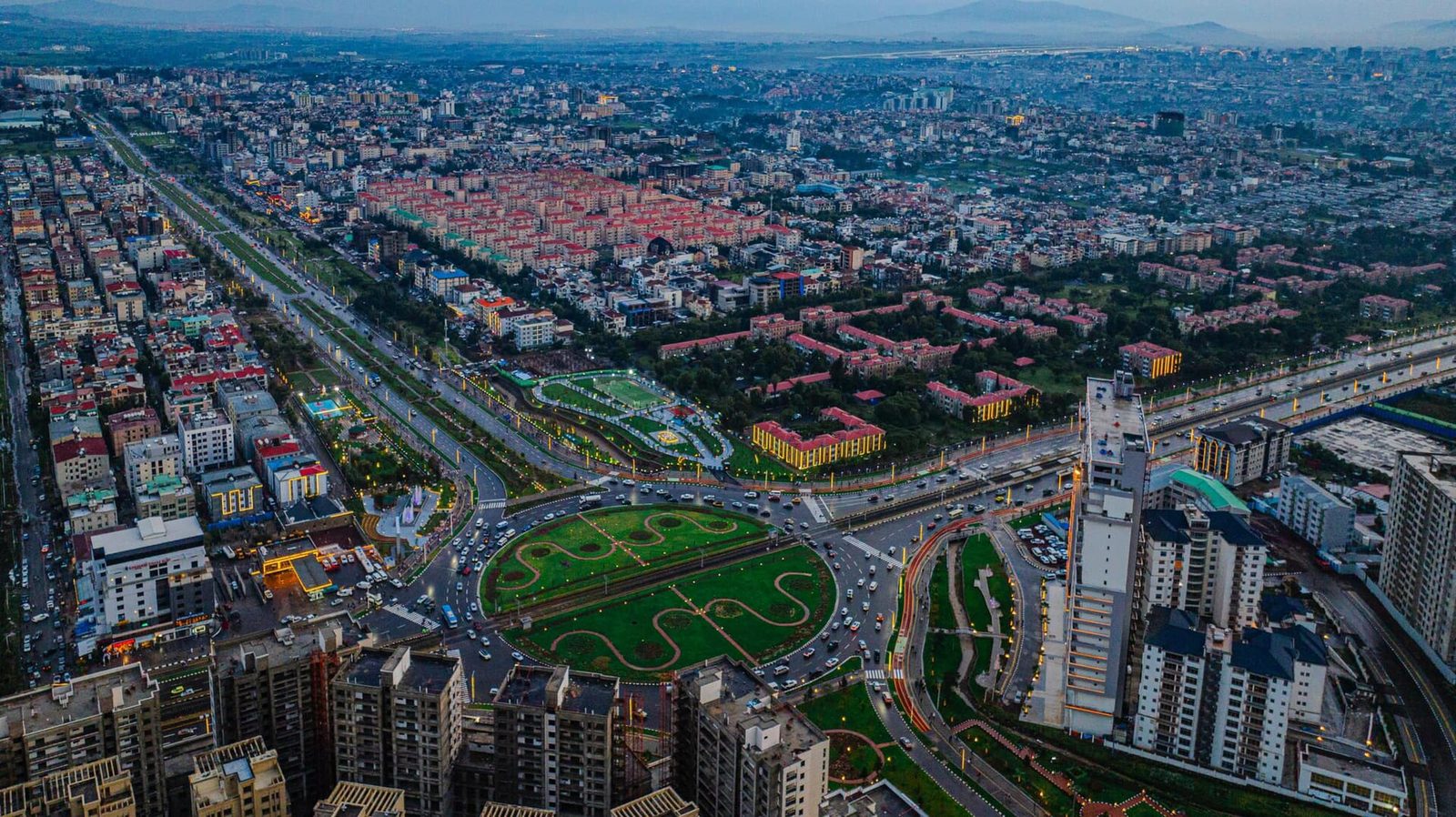
 Photo: Brihaspati / CC BY 4.0 · via Wikimedia Commons
 Kenya
Kenya