Mountain & Summit Trekking · 7 days / 6 nights

Kilimanjaro Machame Route — 7 Days

Africa's highest peak via the scenic 'Whiskey Route' — six nights on the mountain.

Overview

The Machame Route — earned its nickname the 'Whiskey Route' for good reason — is the most dramatic, visually arresting path to Uhuru Peak, the summit of Africa's highest mountain at 5,895 metres. Beginning in the lush montane rainforest above Moshi, the trail climbs through a breathtaking succession of ecological zones: dense Hagenia woodland alive with colobus monkeys and sunbirds gives way to giant heather moorland draped in old-man's-beard lichen, then to the vast, other-worldly expanse of the Shira Plateau at 3,800 metres, and finally to the volcanic rock and glaciers of the alpine desert and arctic summit zone.

Seven days on the mountain — compared with the five-day routes — gives climbers significantly more time to acclimatise, and the Machame route's built-in 'climb high, sleep low' profile is one of its greatest strengths. The critical acclimatisation day pushes trekkers up to Lava Tower (4,630 m) before descending to sleep at Barranco Camp (3,976 m), a physiological trick that dramatically improves red blood cell production and summit success rates. Porters carry tents and camp equipment, the cook prepares hot, nourishing mountain meals, and your licensed guide monitors your health every step of the way.

The route's scenic highlights are hard to overstate. The Barranco Wall — a 300-metre near-vertical scramble — is one of Kilimanjaro's most exhilarating sections, rewarding climbers at the top with sweeping panoramas of the Southern Ice Fields and the jagged silhouette of Mawenzi peak. Crossing the Karanga Valley and ascending the final Barafu Plateau, the mountain strips back to bare rock and ice. On summit night, teams set off at midnight under a canopy of equatorial stars, navigating switchbacks of loose scree in the cold and thin air toward Stella Point (5,756 m) on the crater rim, and then — lungs burning, hearts pounding — the final 45-minute push to Uhuru Peak itself.

Descending via the Mweka Route through the forest to Mweka Gate, climbers are greeted by the warmth of lower altitude, birdsong, and the deep satisfaction of having stood on the roof of Africa. Based in Moshi — gateway to Kilimanjaro and the Chagga heartland — the tour includes round-trip transfers from Kilimanjaro International Airport (JRO) and all logistics from gate to gate.

Route: Moshi → Machame Gate → Shira → Lava Tower → Barranco → Karanga → Barafu → Uhuru Peak → Mweka
Day-by-day itinerary

  1. 1

    Arrival in Moshi & Gear Check

    You are met at Kilimanjaro International Airport and transferred to your Moshi hotel, nestled at the foot of the mountain with Kibo's snow-capped summit often visible above the clouds at sunrise. The afternoon is dedicated to a thorough gear check and pre-climb briefing with your lead guide — covering acclimatisation strategy, trail etiquette, the 'pole pole' (slowly, slowly) mantra, and what to expect over the days ahead. Overnight in Moshi.

    🏨 Moshi hotel (B&B) 🍽 B
  2. 2

    Machame Gate to Machame Camp

    After an early breakfast, transfer by 4x4 vehicle approximately 30 km to Machame Gate (1,800 m) on the southern slopes, where park formalities are completed and your porter team assembles. The trail enters dense montane rainforest almost immediately — a cathedral of Podocarpus and Hagenia trees draped in Spanish moss, echoing with the calls of Hartlaub's turaco and the rustle of blue monkeys in the canopy above. After roughly 5–6 hours of steady climbing through increasing mist and moss, the forest gives way to giant heather and you emerge at Machame Camp (2,835 m) with views opening across the forested valleys below.

    🏨 Machame Camp (tent) 🍽 B, L, D
  3. 3

    Machame Camp to Shira Camp

    Today's trail leaves the heather zone and climbs steeply through moorland studded with giant groundsels (Senecio kilimanjari) and giant lobelias — Kilimanjaro's iconic high-altitude plants, unique to East African volcanoes. The ridge narrows as you ascend the Shira Ridge, revealing the first dramatic views of the Shira Plateau stretching west and the glaciated flanks of Kibo ahead. Arriving at Shira 2 Camp (3,845 m) after approximately 5–6 hours, the immense, flat caldera of the ancient Shira Volcano surrounds you — a landscape that feels genuinely lunar in its scale and solitude.

    🏨 Shira 2 Camp (tent) 🍽 B, L, D
  4. 4

    Shira to Lava Tower (Acclimatisation) & Barranco Camp

    This is the most important acclimatisation day of the trek. The route crosses the plateau and climbs steeply to Lava Tower (4,630 m) — a dramatic volcanic plug where many climbers feel the altitude keenly — before descending 650 metres to Barranco Camp (3,976 m) for the night, exploiting the proven 'climb high, sleep low' principle that primes the body for higher altitudes ahead. The afternoon descent into the Barranco Valley reveals the Great Barranco Wall looming above camp, and at dusk the Southern Ice Fields glow amber against a darkening sky. A long but physiologically vital day of approximately 6–7 hours on the trail.

    🏨 Barranco Camp (tent) 🍽 B, L, D
  5. 5

    Barranco Wall & Karanga Valley

    The morning opens with Kilimanjaro's most thrilling section — the Barranco Wall, a 300-metre hands-and-feet scramble up near-vertical volcanic rock that is easier than it looks but utterly exhilarating. At the top, the full sweep of the Southern Icefields, the jagged outline of Mawenzi (5,149 m) to the east, and the plains of Tanzania stretching to the horizon come into view simultaneously. The trail then dips into the Karanga Valley before a final steep pull up to Karanga Camp (4,035 m), where guides will monitor oxygen saturation closely. The camp sits in a stark bowl of high-altitude scrub with little between you and the summit cone.

    🏨 Karanga Camp (tent) 🍽 B, L, D
  6. 6

    Karanga to Barafu Base Camp

    A relatively short but increasingly demanding ascent of 3–4 hours takes the team from Karanga Camp up volcanic scree and rock to Barafu Camp (4,673 m), Kilimanjaro's main summit base. 'Barafu' means ice in Swahili, and the camp is appropriately stark — a jumble of tents perched on a narrow rocky ridge above the clouds. The afternoon is reserved entirely for rest and sleep before the midnight start: guides will conduct a final equipment and health check, the cook prepares a substantial early dinner and flasks of hot tea, and by 22:00 the camp is silent under a sky blazing with equatorial stars.

    🏨 Barafu Camp (tent) 🍽 B, L, D
  7. 7

    Summit Night & Descent to Mweka Gate

    At midnight, headlamps flicker on across camp and the summit push begins in earnest — a gruelling but magnificent 5–6 hour ascent of switchbacking scree in sub-zero temperatures, the Milky Way wheeling overhead and the lights of Moshi far below. Reaching Stella Point (5,756 m) on the crater rim at dawn, climbers are rewarded with a sunrise igniting the glaciers in gold before the final 45-minute walk along the crater rim to Uhuru Peak (5,895 m) — the highest point in Africa. After photographs, the descent via the Mweka Route is swift: 3 hours to Mweka Camp and a further 3 hours through recovering forest to Mweka Gate (1,640 m), where certificates are issued and a vehicle awaits for the transfer back to Moshi.

    🍽 B, L

Includes

  • Round-trip airport transfers (Kilimanjaro International Airport – JRO)
  • Pre-climb accommodation briefing in Moshi (1 night B&B)
  • Licensed KINAPA mountain guide (1 guide per 2 climbers)
  • Experienced assistant guides and cook
  • Porters for all group camping equipment and food (personal bag limit 15 kg)
  • All national park, rescue, and conservation fees (KINAPA)
  • Campsite and hut fees for all nights on the mountain
  • Full-board mountain meals (breakfast, lunch, dinner and hot drinks throughout)
  • Group camping equipment: tents, sleeping mats, mess tent, cooking gear
  • Emergency supplemental oxygen cylinder and pulse-oximeter monitoring
  • Completion certificate from the national park authority

Excludes

  • International and domestic flights
  • Tanzania tourist visa (currently USD 50, obtain online or on arrival)
  • Personal trekking gear (sleeping bag rated to -20°C, trekking poles, down jacket, waterproofs, headlamp, boots)
  • Travel, medical and emergency evacuation insurance (mandatory — climbers will not be permitted without it)
  • Gratuities for guides, cook and porters (customary pool tip approximately USD 230–280 per climber)
  • Alcoholic and bottled beverages on the mountain
  • Personal medication and altitude sickness prophylactics (e.g. Diamox — consult your doctor)
  • Optional pre/post-climb safari or Zanzibar extension

Good to know — flights & hotels

This price is for the tour/adventure only. International & domestic flights and hotels are not included — we'll gladly suggest trusted options that you book directly.

🏔 Climbing Kilimanjaro?

For the summit climb itself we partner with a specialist operator — book your climb directly with our trusted partner.

Book with ClimbKili

You may also like

Lake Nakuru Day Safari
Kenya
From
$220/pp
1 day
City & Day Tours Easy

Lake Nakuru Day Safari

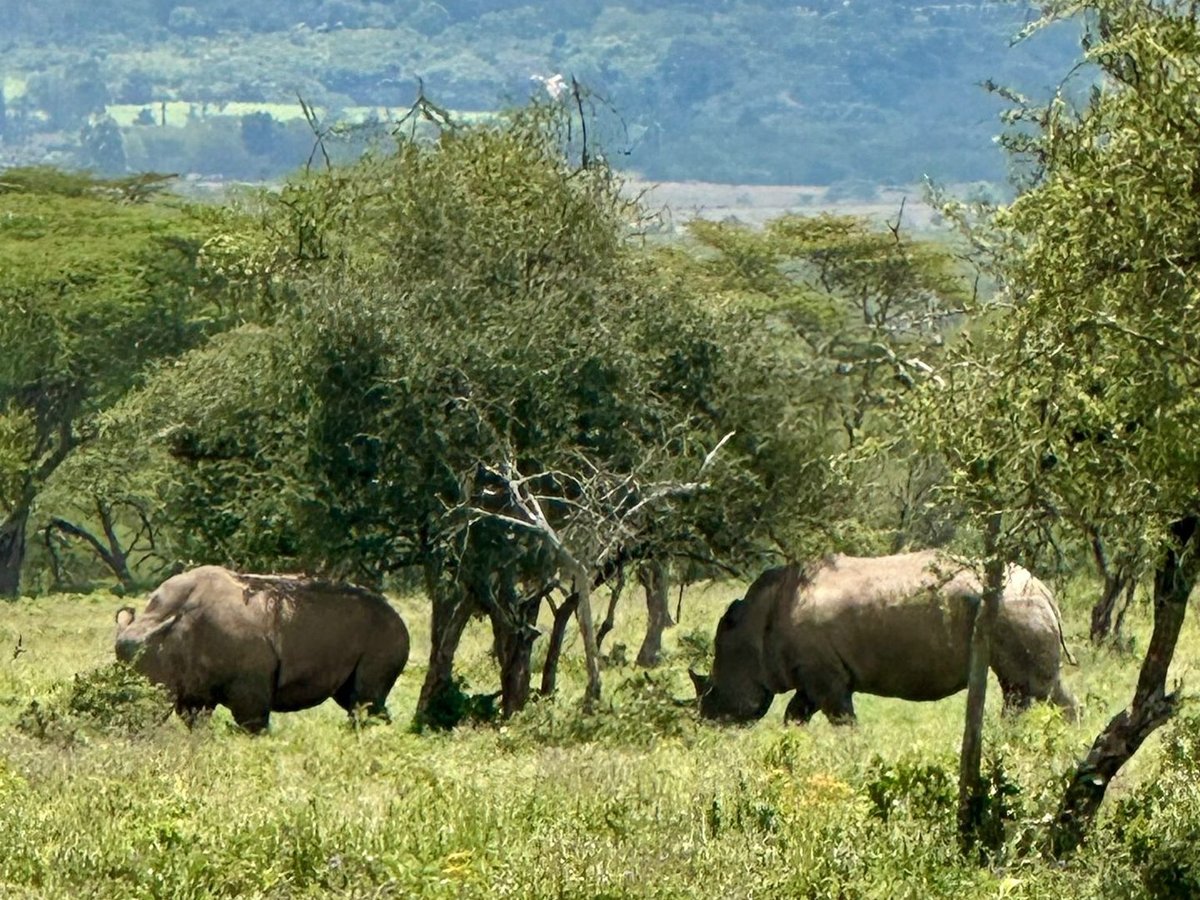
Rhinos, flamingos and Rift Valley views — a perfect Nairobi-to-Nakuru escape.

  • Return road transfer Nairobi–Lake Nakuru–Nairobi in a 4x4 Land Cruiser with pop-top roof hatch
  • Experienced professional driver-guide
  • Kenya Wildlife Service park entry fees for all passengers
From
$2690 per person sharing, minimum…
Book now