Overview
Nyungwe Forest National Park in south-west Rwanda is one of Africa's oldest and most biodiverse montane rainforests — a vast 1,020 km² cathedral of ancient trees draped in moss, threaded by mist and alive with the calls of more than 300 bird species. Straddling the Congo-Nile divide at elevations between 1,600 and 2,950 metres, this primordial forest has survived ice ages and the upheavals of the Rift Valley, sheltering 13 primate species, over 1,068 plant species, and an extraordinary understorey of orchids and giant tree ferns. Four days in this emerald wilderness lets you experience the three signature Nyungwe adventures at a leisurely pace, without the rushed transfers that plague shorter itineraries.
The centrepiece is East Africa's only canopy walkway — a 200-metre suspension bridge system floating 70 metres above the forest floor in the Igishigishigi sector. Walking its swaying spans at dawn, when colobus troops leap through the canopy below you and sunbirds dart between flowering epiphytes, is one of the most genuinely spectacular experiences in African ecotourism. Below the walkway, the Igishigishigi trail winds through ancient Hagenia and Symphonia trees, giving your guide ample opportunity to point out forest chameleons, L'Hoest's monkeys, and the dazzling Regal Sunbird.
Chimpanzee tracking in the Cyamudongo sector is a wilder, more athletic encounter than anything offered in Uganda's heavily visited forests. The Nyungwe chimp community ranges freely across steep ridgelines and river valleys; your ranger will radio-track the troop at first light, and you may find yourself scrambling down muddy slopes to observe these highly intelligent primates cracking palm nuts, grooming, or launching spectacular aerial chases through the high canopy. Permits are limited, keeping the experience intimate and the chimps relaxed.
The afternoon colobus experience is equally remarkable: Nyungwe harbours the largest Angolan colobus superband on Earth — groups of 400 or more individuals that travel, feed, and socialise together in a thunderous cascade of black-and-white fur. Watching them leap ten-metre gaps between emergent trees, white capes streaming, is a wildlife moment that stays with you long after you leave Rwanda.
The journey itself is rewarding. Driving south-west from Kigali through Rwanda's Thousand Hills you pass terraced hillsides of tea and sorghum, descending via Huye — home to one of Central Africa's finest ethnographic museums — before the road climbs again into cool forest mist. The return via the Kigali Genocide Memorial offers a sobering and essential reflection on Rwanda's extraordinary transformation. This is a tour for travellers who want genuine wilderness immersion combined with Rwanda's uniquely warm and safe travel environment.
Route: Kigali → Huye → Nyungwe (3 nights) → Kigali




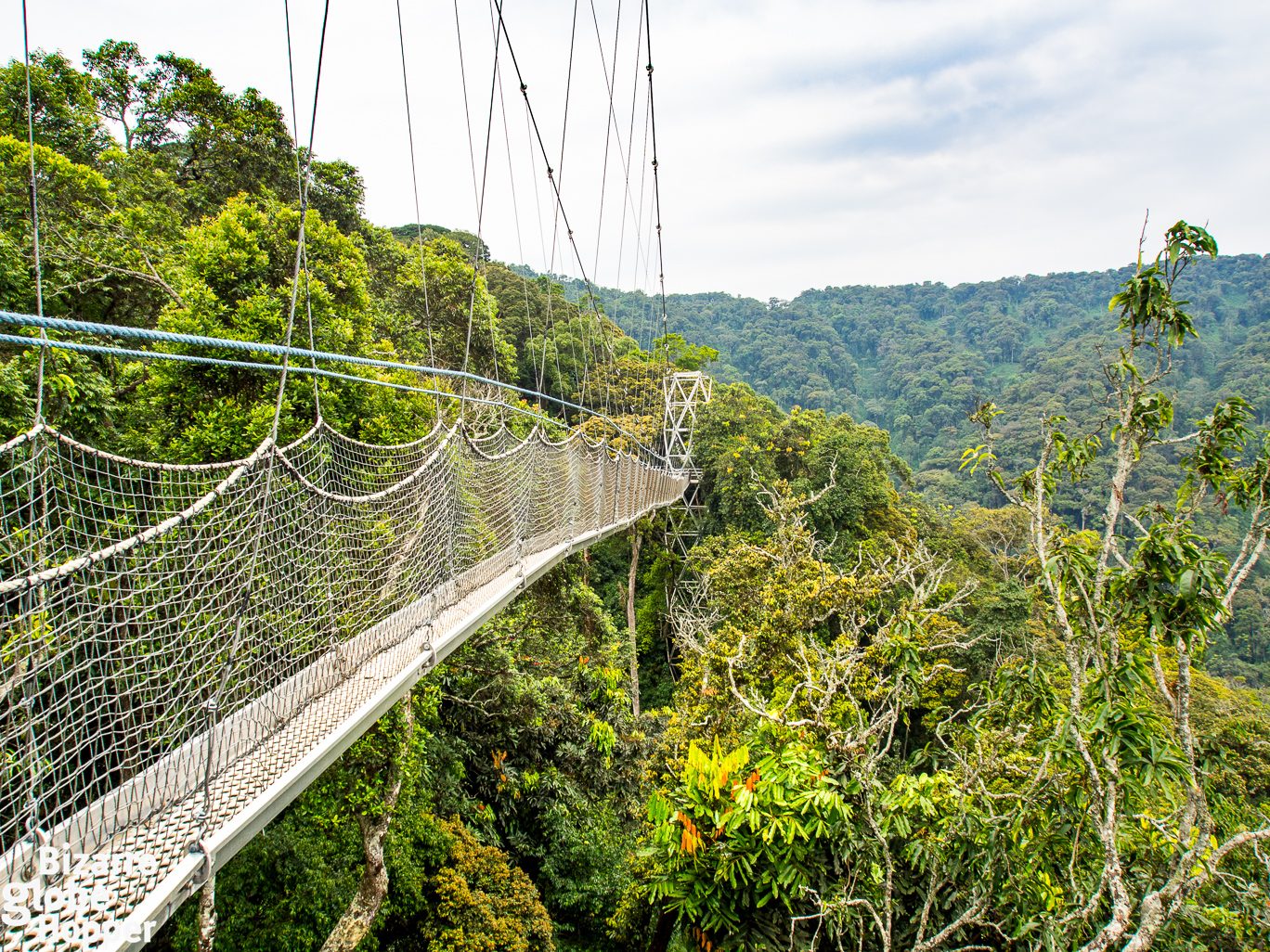
 Photo: Brihaspati / CC BY 4.0 · via Wikimedia Commons
 Kenya
Kenya