Overview
Ethiopia's lower Omo Valley is one of Africa's last true cultural frontiers — a remote river basin in the far south where more than 50 ethnic groups have coexisted for millennia, each maintaining distinct languages, ceremonies, and adornment traditions that exist nowhere else on earth. Scarified torsos, ochre-smeared skin, elaborate beadwork, and the jaw-dropping lip-plates of Mursi women greet you at every turn, offering a window into ways of life that predate recorded history and have barely changed in centuries. This seven-day overland expedition follows the classic lower Omo circuit from the highland gateway of Arba Minch, through the UNESCO-listed Konso Cultural Landscape, and deep into the tribal heartland around Jinka, Turmi, and the Omo River delta.
Your journey brings you face-to-face with four of the most photogenic and culturally distinctive groups in Africa. In Mago National Park you seek out Mursi settlements, where women don fired-clay labrets — lip-plates up to 15 cm in diameter — as a mark of beauty and identity. South of Jinka, the Hamer people of the Turmi area practise the extraordinary Ukuli Bula bull-jumping ceremony, a coming-of-age rite in which young men must run the backs of ten to fifteen cattle without falling — witnessed only with the consent and timing of the community. Along the Omo River near Kolcho village, the Karo people transform their bodies into living canvases, painting intricate patterns in white chalk, charcoal, and ochre before welcoming visitors into their compounds.
The route then drops to the Kenyan border at Omorate, where the Dassanech — semi-nomadic pastoralists and fishers who straddle the Ethiopia-Kenya divide around Lake Turkana — cross the Omo River by dugout canoe to receive guests in their thorn-fenced settlements. The landscapes shift as dramatically as the cultures: red-dust plains, dense acacia scrubland, the teal thread of the Omo River, and the rugged mountains of the Konso highlands, where dry-stone terraced fields and waga wooden ancestor-totem sculptures have earned World Heritage status.
Throughout the expedition, village entry fees and photography levies are paid directly to community representatives, small group sizes limit environmental and social impact, and a dedicated local interpreter fluent in Aari, Hamer, and Mursi dialects ensures every interaction is respectful and meaningful. This is not a zoo circuit — it is a slow, deliberate encounter with living cultures on their own terms, and it remains the single most rewarding cultural journey available anywhere in the Horn of Africa.
Route: Addis → Arba Minch → Konso → Jinka (Mursi) → Turmi (Hamer) → Karo (Kolcho) → Omorate (Dassanech) → return Addis

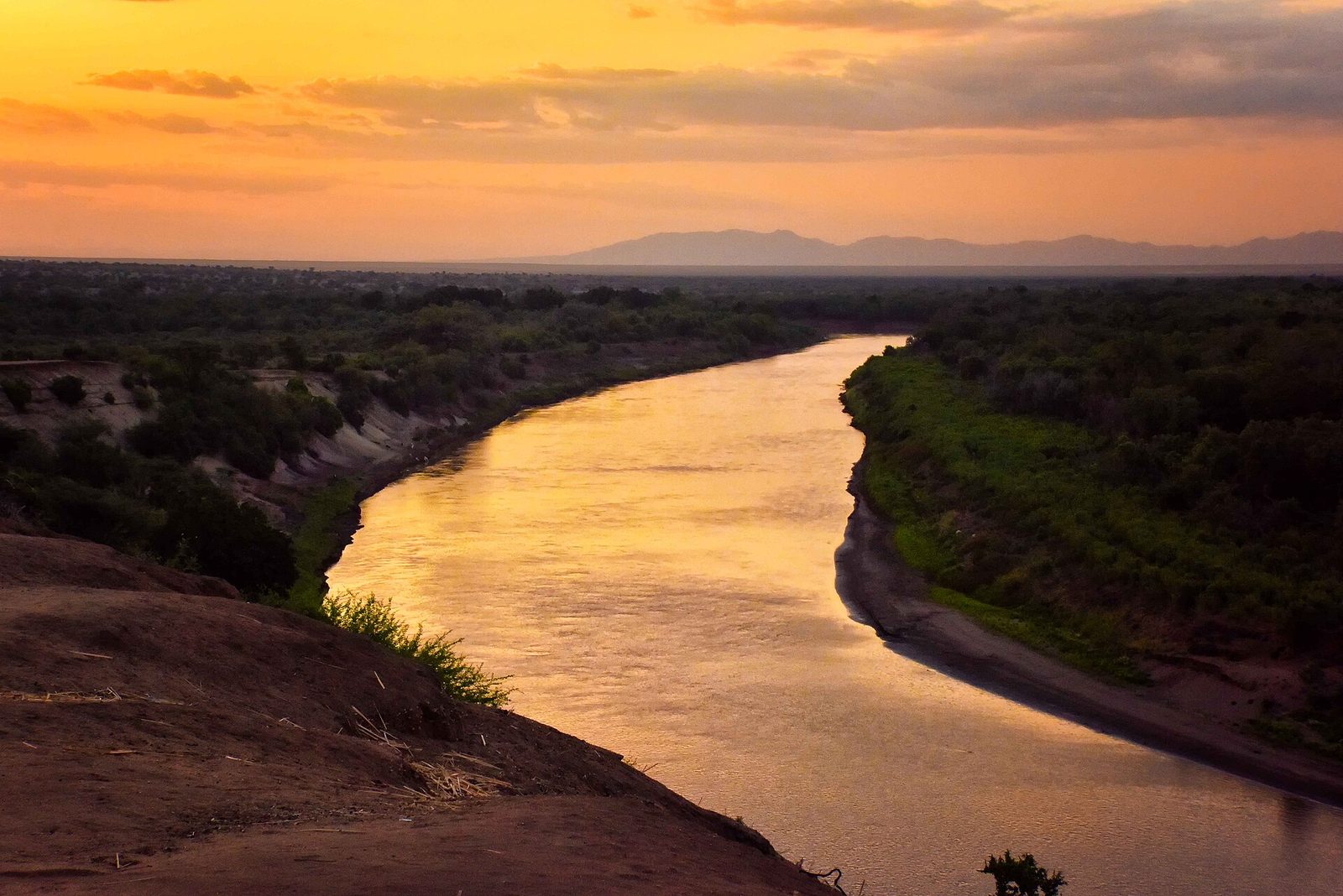
 Photo: Brihaspati / CC BY 4.0 · via Wikimedia Commons
 Kenya
Kenya