-
1
Arrival in Dar es Salaam
Your safari begins in Dar es Salaam, Tanzania's bustling coastal gateway. After clearing arrivals, your AECONS representative meets you and transfers you to your overnight hotel near the Julius Nyerere International Airport. Use the evening to acclimatise, enjoy a welcome dinner of coastal Swahili cuisine, and receive your safari orientation briefing covering the coming week's route, camps, and wildlife expectations.
🏨 Protea Hotel by Marriott Dar es Salaam Courtyard (or similar)
🍽 D
-
2
Fly into Selous — Afternoon Boat Safari
After an early breakfast you transfer to the domestic terminal for your bush flight southwest into the heart of Nyerere National Park (formerly Selous Game Reserve) — Africa's largest game reserve by area. Landing on a grass airstrip fringed by miombo woodland, you are met by your camp guide and driven directly to your tented camp on the banks of the Rufiji River. After lunch and a brief rest, embark on your first boat safari: drifting silently past hippo pods, Nile crocodiles, and colonies of yellow-billed storks as the afternoon light turns the river copper-gold.
🏨 Selous Impala Camp (or similar riverside tented camp)
🍽 B, L, D
-
3
Selous — Walking & Game Drive Safari
Rise before dawn for a guided walking safari through the miombo woodland flanking the camp, tracking elephant and buffalo spoor with your armed park ranger — an experience that sharpens every sense and brings the bush to life at a pace impossible from a vehicle. Return for a late bush breakfast, then spend the afternoon on a full game drive across the open floodplains and fever-tree glades of the Rufiji floodplain, where lion prides, painted wild dogs, and large elephant herds are regularly encountered. End the day with sundowners as the hippos begin their nightly chorus.
🏨 Selous Impala Camp (or similar riverside tented camp)
🍽 B, L, D
-
4
Selous — Lake Safari & Birdwatching
Today's focus shifts to the network of oxbow lakes north of the Rufiji, accessible by boat through channels shaded by wild date palms and raphia fronds. Lake Tagalala and the surrounding lakes are among Tanzania's premier birdwatching spots — open-billed storks, African spoonbills, goliath herons, and African fish eagles are virtually guaranteed, while flamingos and saddle-billed storks appear seasonally. A game drive in the afternoon sweeps through the woodland edge where sable antelope and greater kudu browse in the dappled shade. This evening, a camp naturalist leads a short spotlight walk around the camp perimeter.
🏨 Selous Impala Camp (or similar riverside tented camp)
🍽 B, L, D
-
5
Fly to Ruaha — First Game Drive
After a final early-morning game drive and breakfast at camp, your light aircraft lifts you northwest over the miombo escarpments toward Ruaha National Park — Tanzania's largest national park and a wilderness of towering baobabs, granite kopjes, and the muscular Great Ruaha River. Landing at Msembe airstrip, you are transferred through the park to your tented camp, taking in the dramatically different landscape along the way. An afternoon game drive introduces Ruaha's famous elephant herds, and if fortune smiles, your first sighting of lion or cheetah in this boulder-strewn terrain.
🏨 Ruaha River Lodge (or similar tented camp)
🍽 B, L, D
-
6
Ruaha — Big Cats & Giant Elephants
Full day dedicated to Ruaha's extraordinary big-cat and elephant populations. Morning and late-afternoon drives follow the Great Ruaha River corridor, where elephants gather in herds of fifty or more to drink and play in the shallows — a spectacle of raw wildness. Ruaha holds one of Tanzania's highest concentrations of lions, and large prides are regularly seen hunting or resting in the shade of giant fig trees. Leopard are more secretive but often spotted in riverine thickets, and wild dog dens in the park's eastern sectors bring possible sightings of Africa's most endangered canid. Between drives, lunch and a siesta at camp under the deep shade of an ancient borassus palm.
🏨 Ruaha River Lodge (or similar tented camp)
🍽 B, L, D
-
7
Ruaha — Kopjes, Raptors & Rare Antelope
Today's drive ventures into Ruaha's drier interior, threading between granite kopjes where rock hyrax, klipspringer, and martial eagles hold territory. Roan and sable antelope — rare in most Tanzanian parks — are frequently encountered on the open mbuga grasslands, as are greater and lesser kudu, eland, and Grant's gazelle. The birdlife is world-class: Ruaha red-billed hornbills call from every acacia, while Dickinson's kestrels, martial eagles, and a remarkable diversity of bee-eaters and rollers dazzle overhead. An optional night drive (camp and season dependent) offers a chance to spotlight civets, genets, spring hares, and the enigmatic aardvark.
🏨 Ruaha River Lodge (or similar tented camp)
🍽 B, L, D
-
8
Final Bush Breakfast & Fly to Dar es Salaam
Enjoy one last sunrise game drive along the Great Ruaha River at first light — often when lions are most active after a night's hunting — before returning to camp for a leisurely bush breakfast. Your light aircraft departs mid-morning, offering sweeping aerial views of the Ruaha escarpment and the vast miombo wilderness stretching in every direction. You arrive back in Dar es Salaam in time for onward international connections, carrying memories of Tanzania's wildest, most unspoilt southern circuit.
🍽 B
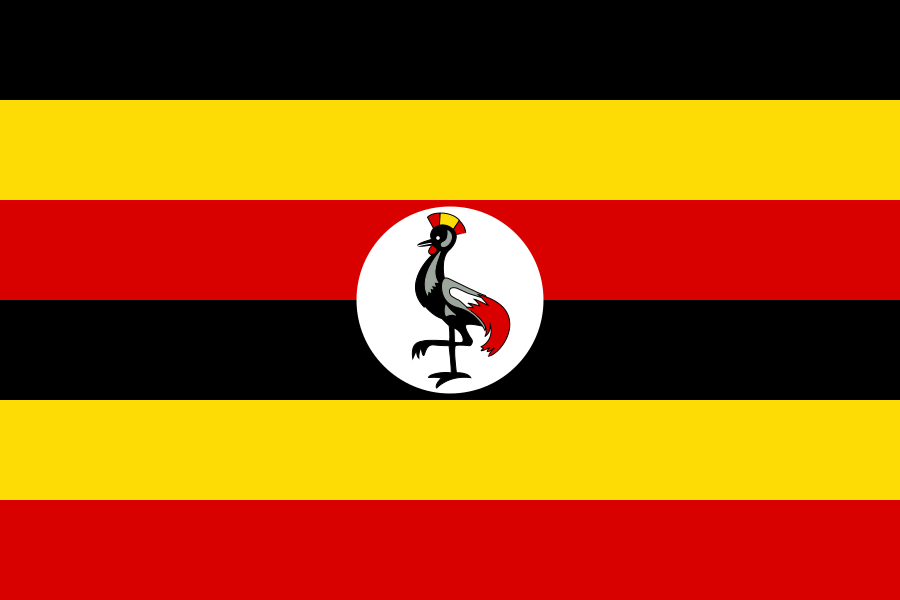




 Photo: Brihaspati / CC BY 4.0 · via Wikimedia Commons
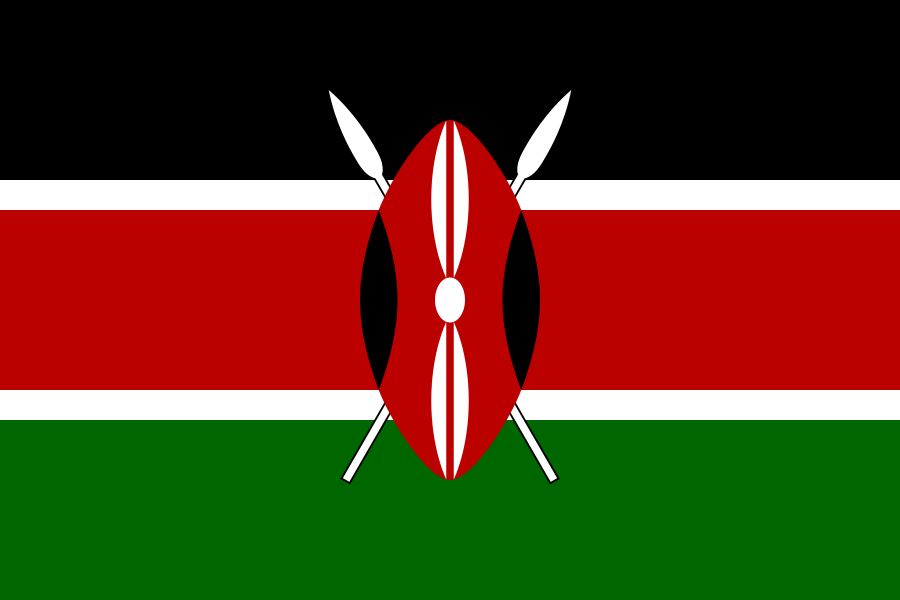 Kenya
Kenya